
It started with a video call that went wrong
The person on the other side of that call was brilliant. They had spent years developing expertise in their field, could hold a room in person, and wrote with clarity and precision. But on screen, something collapsed. Their voice went flat. Their eyes drifted. The energy that made them compelling face to face simply did not survive the camera.
That experience kept repeating. We kept seeing the same pattern across industries, seniority levels, and communication styles. Smart people, real expertise, and a persistent gap between who they were and how they appeared on screen.
What frustrated us was how little of the existing coaching world addressed this specifically. Public speaking training focused on stages. Voice work focused on performance. But the camera is its own medium with its own demands, and almost no one was treating it that way.
We work with what you actually do, not hypothetical scenarios. Your calls, your content, your patterns.
Visible change within two to three sessions is the goal. We do not believe in slow, vague progress.
We record. We review. You see the difference rather than just being told it is there.
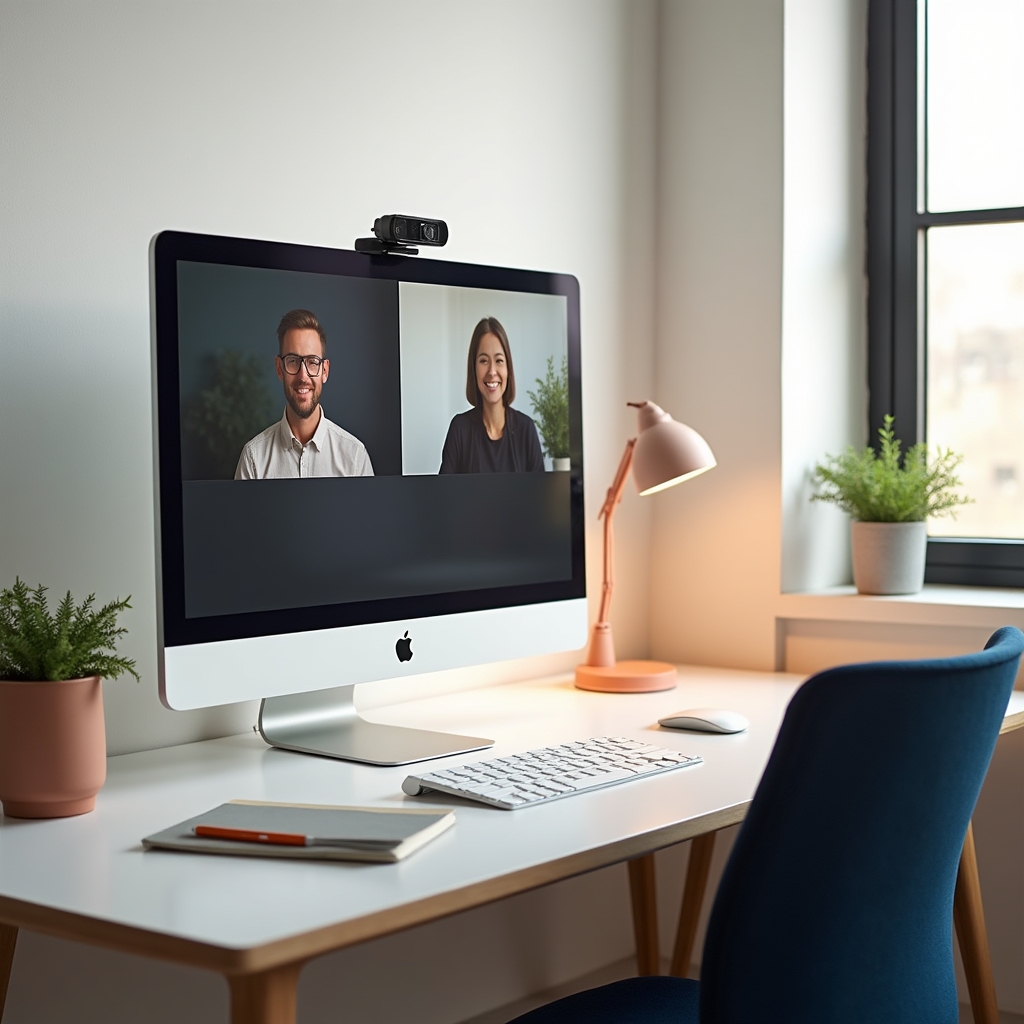
The camera is not a smaller stage
Every technique borrowed from stage performance or public speaking tends to backfire on camera. The medium is intimate, unforgiving, and technically specific. It required its own approach.
The screen compresses everything
Vocal energy, physical presence, eye contact. What reads as natural in person reads as flat or stilted on a small rectangle.
Self-monitoring creates tension
Seeing yourself on screen triggers a feedback loop of self-consciousness that affects voice quality and physical ease.
Technical setup affects performance
Camera angle, lighting, and audio quality shape how your presence lands before you say a single word.
Habits form fast and stick
Most people have been on video calls for years without feedback. Bad habits are deeply embedded by the time anyone addresses them.
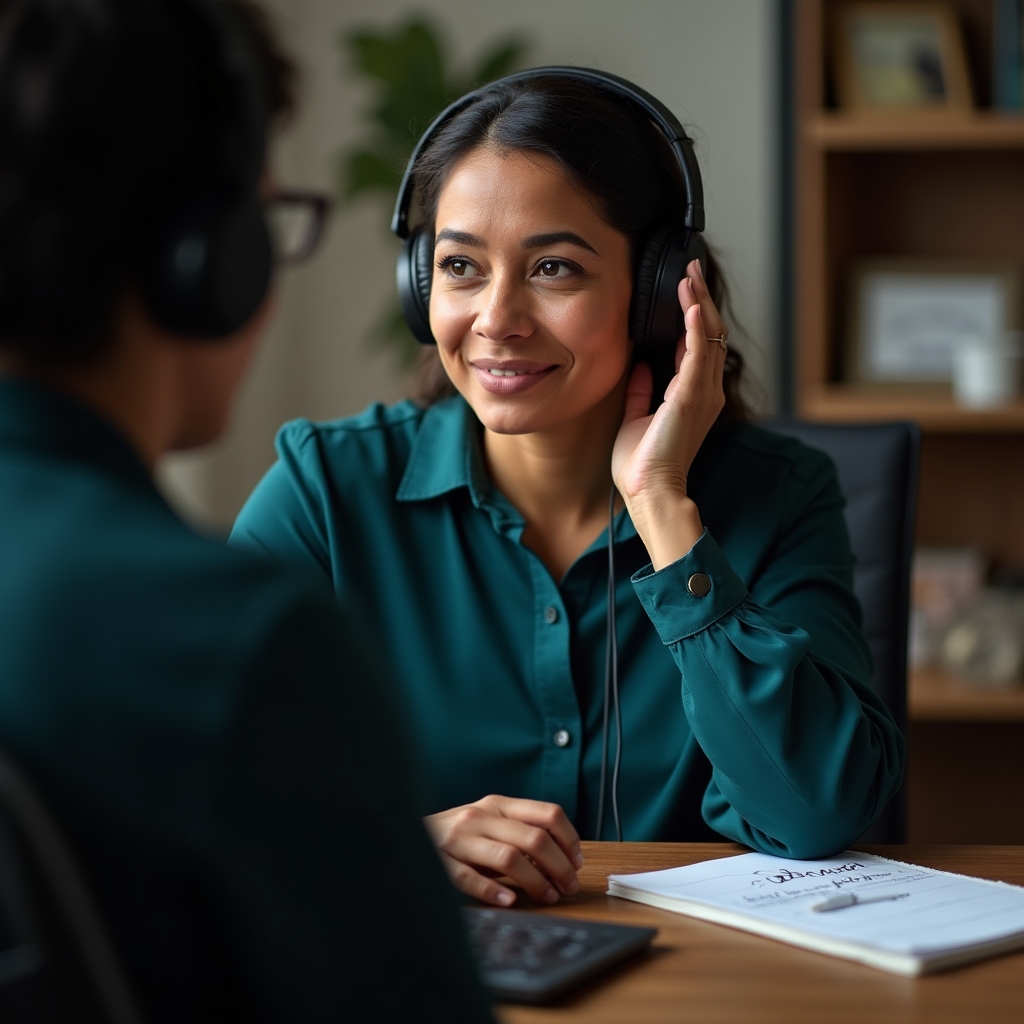
Built on what actually works
We drew from voice training, somatic bodywork, broadcast media coaching, and behavioral science. Not to create a complicated system, but to distill the parts that produce visible change quickly.
The breathing work came first. It turns out that almost every on-camera problem traces back to breath. Short, shallow breathing tightens the throat, flattens the voice, and creates the physical tension that cameras read as stiffness.
The recording review came second. Watching yourself is uncomfortable. It is also the fastest path to change. You cannot argue with what you see. And once you see it, you cannot unsee it.
The habits work came last. Small, specific adjustments to posture, eye contact, and pacing that compound over sessions into a fundamentally different on-camera presence.
See the Full OfferSee what the sessions look like
Every session is conducted virtually. No travel required. Start where you are.